Published in the February 22 – March 7, 2017 issue of Gilroy Life
By Marty Cheek

Marty Cheek
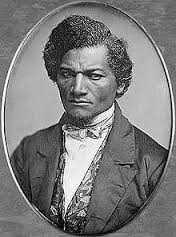
Frederick Douglass
Frederick Douglass got a bump in the news media in February thanks to an interesting choice of words used by President Donald Trump. In a speech commenting on the heroes of Black History Month, the new occupant at 1600 Pennsylvania Ave. did some name-dropping of important African-Americans. It included the Rev. Martin Luther King, Jr., Harriet Tubman and Rosa Parks.
Trump also gave a shout-out to one particularly notable historical figure who stands as a Colossus in the pantheon of American history — the orator, political activist, journalist and abolitionist Frederick Douglass.
“Frederick Douglass,” the president said, “is an example of somebody who’s done an amazing job, that is being recognized more and more, I notice.”
TV commentators were quick to point out Trump’s use of the present tense in his grammar. Did the U.S. president actually think that Douglass, who died in 1895, might be still alive?
It’s a scary thought, of course, that the guy who sits in the nation’s driver’s seat never grasped basic knowledge of key historic characters. Might he think Abraham Lincoln still lives? (If that’s so, Mr. Trump, please Google “Ford’s Theatre, John Wilkes Booth.”)
Some people might ask who cares whether the American president has any knowledge about American history. It does matter. We can learn much from the past leaders of our nation’s story through their successes and failures. And Frederick Douglass helped shape the nation we are today with his ideas on freedom and equality for all. The former slave was influenced by the Transcendentalist movement of the 1820s and 1830s that upheld the idea a person can reinvent themselves through self-education and self-reliance.
Now if Trump in his listing of the Black History Month pantheon of heroes had mentioned the name Mary Ellen Pleasant, the South Valley region should have been truly grateful. Most Americans have never heard of this African-American woman who played a significant role in our nation’s abolition of slavery. Maybe in some ways she is as important as Rosa Parks. Pleasant has a colorful history. She is remembered today as “California’s Mother of Civil Rights.”
Born a slave in 1814 in Augusta, Ga., she saw early in life the torment of people kept in the bondage of a brutal plantation boss. That man tortured and killed her mother in front of the child Pleasant. A sympathetic abolitionist bought her out of slavery at age 9, and she entered a New Orleans convent and received an education there. She later was sent to Nantucket, Mass., and learned business skills from a Quaker merchant. With the Gold Rush, she arrived in San Francisco in April 1852 and set up a restaurant business specializing in Cajun cuisine. She built a fortune through various business enterprises, including running a brothel that catered to the city’s politicians (whom she later blackmailed).
In 1858, Pleasant traveled to Canada to meet John Brown, the fiery-tempered abolitionist. She worked with him for more than a year helping in an attempt to spark a slave uprising across America. Against her advice, Brown tried to take the Harper’s Ferry arsenal in Virginia. He was captured in the raid and hanged. John Brown became a martyr for the abolitionist movement, enabling men like Douglass to move the nation forward both socially and politically to end slavery.
After Brown’s death, Pleasant returned to California. Along the way, she stopped in Cape Girardeau, Mo., at the home of plantation owner Hiram Sloan. She met Sloan’s grandchildren, Sarah Althea Hill and her brother Hiram Morgan Hill. She formed a close friendship with them. Years later in 1870, at Pleasant’s encouragement, both Hiram and Sarah moved to San Francisco where she introduced them to the city’s society. Twelve years later, Hiram married Diana Murphy, the daughter of wealthy South Valley land owner and California pioneer Daniel Murphy.
In 1886, the couple moved into a home they called Villa Mira Monte that looked upon a conical-shaped mountain known as El Toro. Their property would eventually become known as Morgan Hill, named after the man. That’s the amazing thing about history. All the paths among people connect somehow at some point.
Trump’s awkward mention of Douglass led me to abolitionist Mary Ellen Pleasant who helped give birth to the city of Morgan Hill through her friendship with Hiram Morgan Hill. Maybe that’s a lesson of Black History Month. Regardless of race, gender or any other quality, our lives are all linked.