

Sale is a fun, friendly way for gardeners to acquire greenhouse-quality plants at down to earth prices
Published in the May 3 – May 16, 2017 issue of Gilroy Life
By Marty Cheek
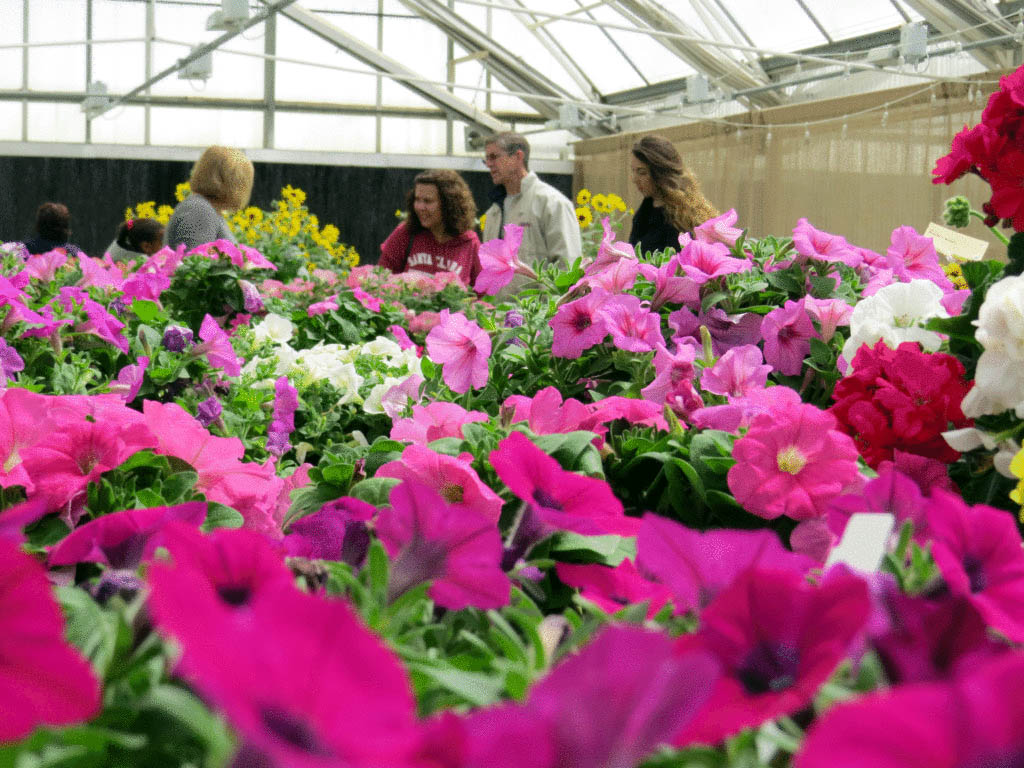
Photo by Marty Cheek
Patrons roam the Gilroy Rotary Club Flower Sale at Syngenta April 8.
People arrived as early as 6:30 a.m. They lined up in the cold in front of the Syngenta Goldsmith Seeds greenhouse Saturday April 8 and waited patiently for the doors to open promptly at 8 a.m. When they walked in, they found waiting from them a cornucopia of colorful flower plants for their gardens.
The Gilroy Rotary Club’s annual sale held in spring has grown into a popular fundraiser for the service organization to raise money for local charities and student scholarships. This year’s event held at the seed company’s site on Hecker Pass raised about $30,000. Gilroy Rotarian Whitney Pintello has chaired the sale for five years. She sees it a fun and friendly way for local gardening fans to get greenhouse-quality plants at down to earth prices.
“They call it plant lust,” she said. “There are people who come in here with wagons and they have a team to mark out their territory for what they’re looking for. Everyone has a great time.”
The tradition was started by the Goldsmith family. Five decades ago they started an annual spring flower showcase event at Goldsmith Seeds where they invited growers to their greenhouse to see their plants on display next to the competitor’s. For years, after the week of the marketing event was over, the potted plants were thrown away. Then the Goldsmiths got an idea to give the flowers to the local Rotary club for a fundraising sale/pancake breakfast held at the parking lot by ACE Hardware.
When Goldsmith Seeds was bought by Syngenta two years ago, the tradition of donating the plants to the Rotary continued. Some years $50,000 is raised by the sales, Pintello said.
“It’s a fun community event. People love it,” she said. “They line up outside so they can get a glimpse of what’s in here because it’s not open to the public the rest of the year. It’s a treat to be able to come into the greenhouse.”
Joel Goldsmith, former owner of the seed company, described how the plant sale evolved over the years. His father bred flowers for certain characteristics, such as color, and he created a showcase event decades ago to enable customers to compare Goldsmith Seeds plants with the competitors.
“This is the result of an annual flower show that is done by genetics producers all over the world,” he said. “They come in and find a spot in California and so there’s 20 different locations from Santa Paula to here where people have them,” he said.
The chain starts with the genetics suppliers that sell seeds to distributors. They in turn sell the seeds to growers who produce the flowers, then sell them to retailers such as Home Depot and Lowe’s as well as independent garden centers.
“That’s how it gets to the consumers, so the line goes a long ways back,” Goldsmith said. “So the growers, distributors and some of the retailers come during this week and look at the new products. So it’s a marketing showcase. We were the company that started this. We figure it’s 50 years this year that we’ve been doing this show.
t’s a big showy convention. They turn this greenhouse into a showcase. People come from Amsterdam and Germany and other places all over the world to come and see what’s new in seed technology.”
Goldsmith was uncertain when the first Gilroy Rotary plant sale was held.
“We’re trying to figure that out. I was having a conversation with my parents about it,” he said. “We figure it must be somewhere between 25 and 30 years.”
The showcase event grew bigger and turned into much more of a sales marketing show as opposed to comparing genetics as it was originally started. The plants left over after the show were given to employees and friends or thrown away. Then Goldsmith, a Rotarian, decided the still beautiful plants could help the Gilroy Rotary Club raise funds for worthy cause.
“At first it was a pick-up load where we had an annual pancake breakfast and flea market,” he said. “We started having a flower sale every spring. We would put up all the plants into cardboard boxes, load them on a truck and take them to a local shopping center and sell them that way. It was a lot of work.”
The plants just didn’t look as good as they did in the greenhouse because they’d been in a box overnight, he said. Then the decision was made 15 years ago to start selling the flowers out of the big greenhouse “Then it really took off,” Goldsmith said. “It’s fun to have the public come in and get acquainted with the plants…. It’s taking something that’s already served its purpose and benefiting the community and allows the club to support local programs and scholarships.”
Families come with their children to pick out the flowers to plant in their home gardens, he said. The kids learn something about the South Valley agriculture industry when they visit the seed company’s site.
A couple of years ago, Goldsmith Seeds sold its Hecker Pass operations to Syngenta. Joel maintained a relationship with the new owners and encouraged them to continue helping out the Rotary by hosting the annual plant sales.
“Everyone has a great time,” Pintello said. “This is stuff you can’t find in a store because it’s greenhouse quality made by breeders and growers for showmanship so it’s high quality… A lot of the nonprofits that we give money to show up to help out with this event because it funds their efforts. They co-promote with us so it’s a nice partnership.”
Gilroy Rotarian Tammy Brownlow described how enthusiastic the local residents who come to the plant sales can be, having fun chatting as the line grows and winds around the Syngenta parking lot until the opening hour.
“They want the first pick of everything,” she said. “A lot of the really fancy containers and hanging plants and the really more premium plants — people just load up on them because the prices are just so tremendous. I’m a plant person myself, so I’ve got a little pile that I’m going to be buying. It’s so cool that people in the community for the most part realize that most of the money raised goes to scholarships and community giving.”


